
Austin, TX & nearby communities
Foundation Repair in Austin, TX
Professional foundation evaluation and repair solutions for slab and pier-and-beam homes across Austin and nearby communities.
Slab foundations · Pier-and-beam foundations · House leveling · Foundation piers · Drainage

Common Warning Signs of Foundation Movement
Foundation problems rarely announce themselves all at once. Most Austin homeowners notice one small thing first — a door that suddenly drags, a hairline crack above a window, a floor that feels off when you walk it barefoot. Any single sign can have an innocent explanation. Several appearing together, or one that keeps getting worse across seasons, is worth an evaluation.
Foundation cracks
Slab, wall or floor cracking that keeps changing.
Learn moreBrick cracks
Stair-step cracking through mortar joints outside.
Learn moreUneven floors
Sloping, bouncing or dipping floors inside the home.
Learn moreSticking doors
Doors that drag, stick or no longer latch.
Learn moreGaps around windows
Separation at trim, frames or window corners.
Learn moreSigns of settlement
One side of the house sitting lower than the rest.
Learn moreSlab movement
Movement in a concrete slab foundation.
Learn moreFoundation heave
Upward movement, often after heavy moisture gain.
Learn moreCore Foundation Services
Repair planning starts with diagnosis. Once we understand how the foundation is actually moving, we recommend the narrowest solution that addresses it — sometimes structural piers, sometimes leveling and drainage work.
Slab Foundation Repair
Repair options for concrete slab movement, settlement and cracking.
Learn morePier & Beam Foundation Repair
Beam, joist, shim and pier work for crawl space foundations.
Learn moreHouse Leveling
Bringing a settled or out-of-level house back toward a workable elevation.
Learn moreFoundation Piers
Underpinning that transfers structural load to deeper, more stable support.
Learn moreSteel Piers
Driven steel pier systems and where they typically make sense.
Learn moreConcrete Piers
Pressed and drilled concrete pier systems compared to steel.
Learn moreDrainage Correction
Grading, runoff and moisture management around the foundation.
Learn moreFoundation Inspection
A free on-site evaluation of visible conditions and site factors.
Learn moreWhy Foundations Move in the Austin Area
The Austin area is not geologically uniform, and that matters more here than in many other Texas markets. Two homes twenty minutes apart can sit on very different ground and show very different foundation behavior over the same decade.
- East, northeast and some outer suburban areas are more commonly associated with clay-heavy soils, where volume change during wet and dry cycles can move a foundation.
- West and Hill Country side properties more often involve limestone influence, slope, shallow rock and engineered fill — where drainage patterns, cut-and-fill depth and runoff tend to drive problems.
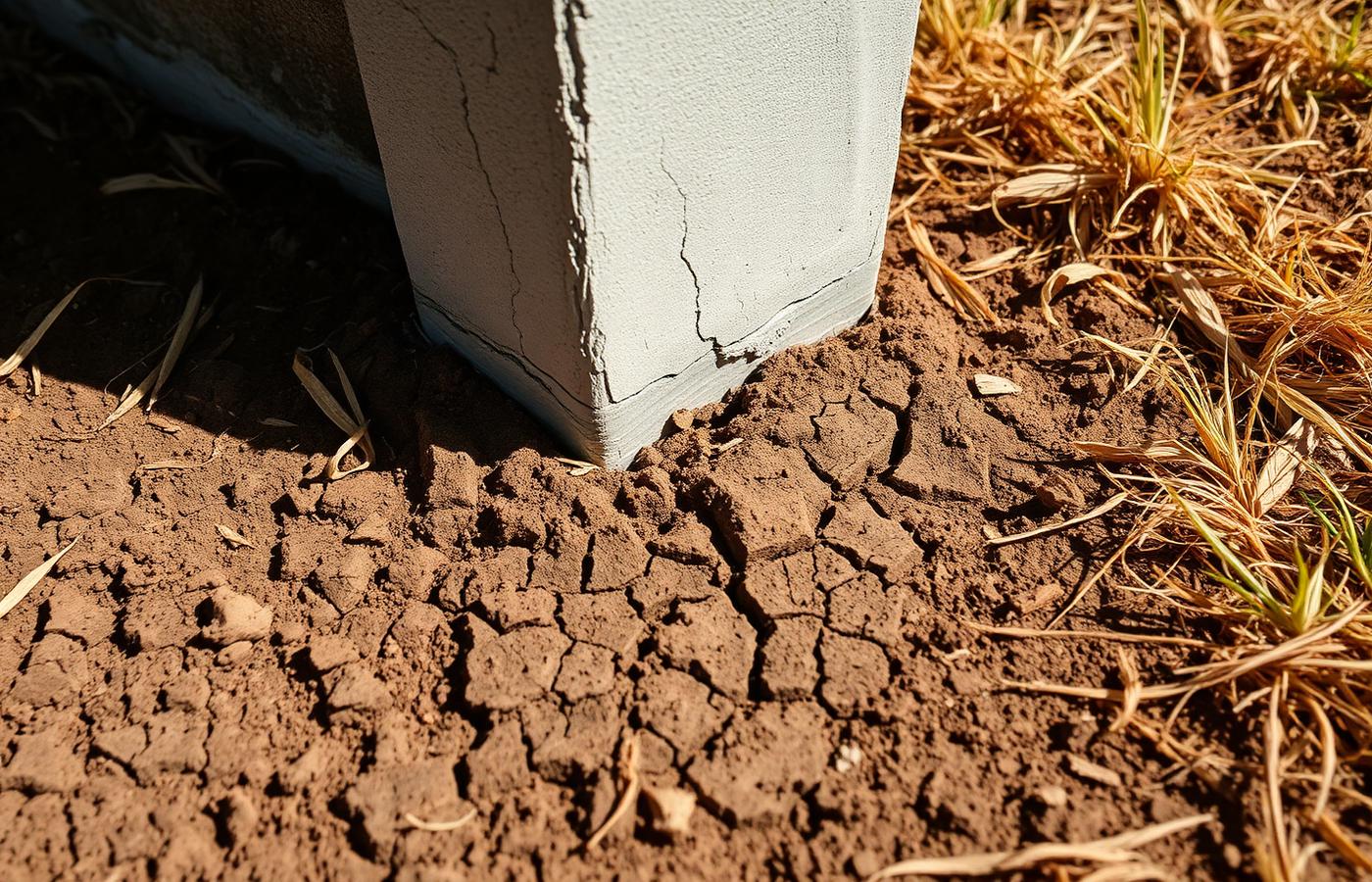
- Moisture change is the common thread. Long droughts, sudden heavy rain, irrigation habits, tree root uptake and plumbing leaks all change how much water sits under and around a slab.
This is why we avoid blanket statements like "all Austin homes have expansive clay problems." Some do. Others are affected far more by slope, drainage or mixed soil-and-rock conditions. Determining which applies to your property is the first job of an evaluation.

Foundation Repair Cost in Austin
Homeowners want a number before they want a sales visit. Here is honest context: many residential foundation repairs in the Austin market fall roughly between $3,500 and $25,000+, depending on foundation type, severity of movement, repair method, number of piers, site access, drainage conditions and other structural factors. Plenty of ordinary projects land somewhere around $6,000–$14,000. Larger or more complex projects can exceed that range.
None of those figures is a quote. Two houses on the same street can differ by thousands based on pier count and access alone. An on-site evaluation is needed for an accurate estimate.
Austin Foundation Education
Three local topics come up in nearly every conversation we have with Austin-area homeowners. Each has its own page:
Austin Soil Conditions and Foundation Problems
Why foundation behavior varies across the Austin area.
Learn moreShould You Water Your Foundation in Austin?
Moisture consistency, drought stress and common mistakes.
Learn moreFoundation Repair Permit Information in Austin
When permitting can come into play on a repair project.
Learn moreService Areas Around Austin
We work throughout Austin and the surrounding metro. Each community has its own mix of housing age, terrain and site conditions.
How It Works
- 1
Tell Us What You Are Seeing
Submit the short form with your address and the symptoms you have noticed. No lengthy questionnaire.
- 2
Schedule an Evaluation
We visit the property, take elevation readings and review visible signs, drainage and site conditions.
- 3
Review Repair Options
You get repair recommendations and pricing based on the actual conditions at the property.
Schedule a Free Foundation Evaluation
Share a few details about the property and what you are seeing. Evaluations are based on visible conditions, elevation readings and site factors at your home.
- Free, on-site foundation evaluation
- Slab and pier-and-beam homes
- Clear explanation of repair options
- Written pricing based on real conditions
Austin Foundation Repair FAQ
- How much does foundation repair cost in Austin?
- Most residential foundation repairs in the Austin market fall roughly between $3,500 and $25,000 or more, and many ordinary projects land somewhere around $6,000 to $14,000. The range is wide because pier count, foundation type, depth, access and drainage all change the scope. An on-site evaluation is needed for an accurate estimate.
- What causes foundation movement in Austin?
- Moisture change in the supporting soil is the most common driver. In clay-influenced areas, soil can shrink during drought and swell after heavy rain. In rockier or sloped areas, drainage patterns, fill depth and site grading tend to matter more. Plumbing leaks and poor runoff control can also concentrate moisture near one part of a foundation.
- Are cracks in brick a sign of foundation problems?
- They can be. Stair-step cracking through mortar joints, separation at corners, or brick cracks that widen toward the top often point to differential movement. Fine hairline cracks are sometimes cosmetic. The pattern, width and location matter more than the crack itself, which is why an on-site look is more useful than a photo.
- What is the difference between slab and pier-and-beam repair?
- Slab repair usually means installing piers under the perimeter or interior of a concrete slab to support and lift settled areas. Pier-and-beam repair happens under the floor structure: adjusting or replacing piers, shimming beams, and repairing damaged joists or sills from the crawl space.
- How do I know if my floors are uneven because of the foundation?
- Elevation readings across the floor show whether the slope is structural. A dropped-ball test or level can hint at it, but localized sag from a failing joist and a broad slope from slab settlement look similar to a homeowner and are corrected very differently.
- Do foundation repairs in Austin require permits?
- Some foundation work in Austin requires a permit depending on scope, and structural repairs are more likely to than minor cosmetic work. Requirements also vary between the City of Austin and surrounding jurisdictions. We cover the general concepts on our Austin foundation permit page, and confirm requirements per project.
- What are foundation piers?
- Piers are supports installed beneath a foundation to transfer building load down to deeper, more stable material. They can be steel or concrete, driven or drilled, and the right choice depends on soil profile, depth to stable bearing, structural load and site access.
- Can drainage problems damage a foundation?
- Poor drainage is one of the most common contributors to foundation movement. Water pooling against the slab, negative grading, downspouts discharging at the wall, or runoff from a neighboring slope all create uneven moisture around the perimeter.
- Should I water my foundation during dry weather?
- In clay-influenced parts of the Austin area, keeping soil moisture reasonably consistent during long dry spells can reduce shrinkage at the perimeter. It is not a repair, and overwatering causes its own problems. Our foundation watering page explains where the practice helps and where it does not.
- Should I get a foundation inspection before selling my home?
- It is often worth it. Knowing whether visible cracks or slopes are structural gives you an informed answer for buyers and inspectors, rather than negotiating against an unknown during the option period.
Concerned About Your Foundation?
Get a free on-site foundation evaluation based on what is actually happening at your property — not a guess from a photo.